Source Grooved Wooden Wool Acoustic Panels for Offices, Studios, Schools
Compare 27 listings of Grooved Wooden Wool Acoustic Panels with varying NRC ratings, fire classes, and sizes. Buyers can evaluate options for restaurants, recording studios, and classrooms based on available customization and certifications.
Key considerations
Products List


New Decorative Soundproofing Timber Wooden Grooved Acoustic Panel
$20.00 - $30.00
MOQ: 100 Square Meters


Sound Absorbing Wood Wool Acoustic Wall Board Panels with High Quality
$12.07 - $14.75
MOQ: 100 Square Meters



Comprehensive Sourcing Guide
Strategic Sourcing Guide for Grooved Wooden Wool Acoustic Panels
Understanding Product Definitions and Technical Attributes
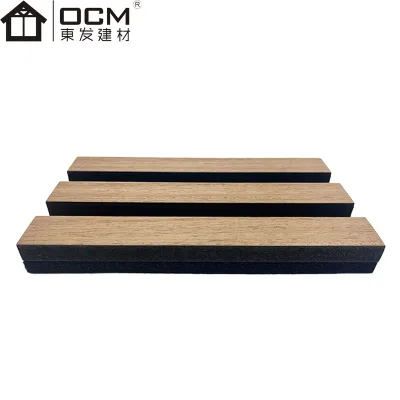
The procurement of Grooved Wooden Wool Acoustic Panels requires a precise understanding of the material composition and structural design that defines this category. In the context of modern acoustic engineering, these panels are distinct from standard wooden slats or pure fiber boards. The core material is identified as Medium Density Fiberboard (MDF), which serves as the substrate for the acoustic performance. The surface treatment often involves a specific finish, such as black felt or melamine, to enhance sound absorption while maintaining a refined aesthetic. The term "wool" in the product name frequently refers to the texture or the specific type of fiber integration within the grooved design, creating a textured surface pattern that aids in diffusing sound waves.
The physical dimensions of these panels are critical for installation planning. Observed specifications indicate a standard size of 2440mm in length, with widths varying between 133mm and 197mm, and a consistent thickness of 15mm. Alternative configurations exist, such as square tiles measuring 600mm by 600mm, which cater to different ceiling grid systems. The grooves themselves are a defining feature, often described as "groove wooden acoustic panels," designed to increase the surface area available for sound absorption. The edge profile is typically square, ensuring a clean, flush installation when panels are joined. Buyers must verify that the specific model they select, whether designated as HT32, G16, G8, or MPL8-8-1, aligns with the required architectural dimensions and the intended acoustic load of the space.
Acoustic Performance and Fire Safety Compliance
Acoustic performance is the primary driver for selecting these panels, and the metrics must be scrutinized against the specific needs of the application. The Noise Reduction Coefficient (NRC) is a key indicator of sound absorption capability. Data suggests that for specific acoustic panel models, the NRC can range from 0.75 to 0.95, indicating high performance suitable for demanding environments like recording studios and home theaters. Other variations may show an NRC of 0.7, which is still effective for general office or classroom settings. The application scope is broad, covering restaurants, office meeting rooms, classrooms, and schools.
Fire safety compliance is equally non-negotiable in commercial procurement. The fire resistance ratings observed in the market vary, with some products holding a Class B rating and others achieving a Class A rating. The fireproof grade is often listed as B2, which requires careful verification against local building codes, as Class A is generally preferred for high-traffic public spaces. The presence of a Test Report covering flame retardancy is a standard requirement. Buyers must ensure that the specific batch of panels carries the correct certification, whether it is Class A or Class B, as this directly impacts the legal compliance of the construction project. The material's fire resistance is intrinsic to the MDF core and the surface finish, such as the black felt or painted treatments, which must be tested for their contribution to the overall fire rating.
Environmental Standards and Material Safety
Sustainability and indoor air quality are paramount in modern construction, particularly for spaces where occupants spend extended periods, such as offices and schools. The environmental certification for these panels is a critical factor. Products are frequently categorized with E1 or E0 formaldehyde emission ratings, indicating low volatile organic compound (VOC) release. The E1 rating is a common standard, while E0 represents a stricter threshold for ultra-low emissions. The product is explicitly labeled as "Eco-Friendly," supported by test reports that verify eco-protection claims.
The material composition, primarily MDF, must be sourced from suppliers who adhere to strict environmental protocols. The certification list often includes CE, ASTM, and ISO standards, which validate the manufacturing process and material safety. The "Eco-Friendly" attribute is not merely a marketing term but is backed by specific test reports for sound absorption and flame retardancy, ensuring that the environmental claims are substantiated. Buyers should request the specific environmental certification documents for the model they intend to purchase, as the E-rating (E0 vs. E1) can vary between different product lines from the same manufacturer. This verification ensures that the installed environment meets the health and safety standards required by local regulations and corporate sustainability goals.
Cost Drivers and Minimum Order Quantities
The pricing structure for Grooved Wooden Wool Acoustic Panels is influenced by several variables, including the specific model, surface finish, and the volume of the order. The observed price range in the market spans from $2 to $52 per unit, reflecting the diversity in product complexity and material quality. Factors driving the cost include the depth and precision of the grooves, the type of surface finish (e.g., black felt versus melamine), and the fire rating achieved. Higher NRC values and Class A fire ratings often command a premium price due to the additional testing and material processing required.
Minimum Order Quantity (MOQ) is another significant cost driver. While some suppliers offer a low entry point of 1 piece for specific acoustic panel models, allowing for small-scale prototyping or repairs, larger commercial projects typically face an MOQ of 100 square meters. This discrepancy highlights the difference between retail and wholesale procurement channels. Buyers planning large-scale installations must account for the 100sqm threshold, which may influence the decision to consolidate orders or select a supplier with more flexible terms. The packaging, typically in cartons, also adds to the logistical cost, and the lead time associated with fulfilling large orders must be factored into the project timeline. Understanding these cost dynamics helps in budgeting accurately and negotiating effectively with potential suppliers.
Supplier Evaluation and Origin Verification
When evaluating suppliers for Grooved Wooden Wool Acoustic Panels, the place of origin is a key indicator of manufacturing capability and supply chain reliability. The majority of these products originate from Shanghai, China, a hub for wood processing and acoustic material manufacturing. The brand name "Colorbo" is associated with these products, indicating a specific manufacturer or brand line. However, buyers should not limit their search to a single brand but rather evaluate the supplier's ability to meet the specific technical requirements.
Verification of the supplier's credentials is essential. Buyers should look for suppliers who can provide the full suite of certifications, including CE, ASTM, and ISO, as well as specific test reports for fire resistance and acoustic performance. The availability of after-sales service, such as one-to-one 24-hour full-time support, is a strong indicator of a reliable supplier. The warranty period, typically one year, should be clearly defined in the contract. Additionally, the customization capabilities of the supplier should be assessed, as the "Custom" pattern attribute suggests that many manufacturers can tailor the groove depth, panel size, or surface finish to meet unique design requirements. A supplier's ability to provide samples and detailed technical data sheets is crucial for making an informed decision.
Quality Control and Long-Term Procurement Strategy
Implementing a robust quality control (QC) strategy is vital for ensuring that the delivered panels meet the specified performance criteria. The QC process should begin with the verification of the test reports, ensuring that the NRC, fire rating, and environmental certifications match the order specifications. For large orders, it is advisable to conduct third-party inspections at the factory before shipment to verify the physical dimensions, edge quality, and surface finish. The consistency of the groove pattern and the uniformity of the color are critical aesthetic factors that can affect the final installation.
Long-term procurement considerations involve establishing a relationship with a supplier that can provide consistent quality over time. The warranty of one year should be reviewed to understand the coverage for defects in materials or workmanship. Buyers should also consider the availability of replacement panels for future maintenance, ensuring that the product line remains in production. The lead time for production and shipping must be managed carefully, especially for projects with tight deadlines. By maintaining a clear record of the product models, specifications, and certification documents, buyers can streamline future reorders and ensure continuity in their acoustic design projects. This strategic approach minimizes the risk of supply chain disruptions and ensures that the acoustic performance of the space remains optimal over the lifespan of the installation.
Application-Specific Selection Criteria
The selection of Grooved Wooden Wool Acoustic Panels must be tailored to the specific application environment. In restaurants and home theaters, high NRC values (0.75-0.95) are essential to manage reverberation and enhance audio clarity. For classrooms and schools, the focus may shift towards fire safety (Class A rating) and environmental safety (E0/E1 rating) to ensure a healthy learning environment. Office meeting rooms require a balance of acoustic performance and aesthetic appeal, often favoring the black felt finish or textured patterns that complement modern office designs.
The installation method also varies by application. The 2440mm length panels are ideal for wall cladding in large spaces, while the 600mm x 600mm tiles are better suited for suspended ceiling grids. The square edge design facilitates a seamless look in both scenarios. Buyers should consider the lighting conditions in the space, as the textured surface pattern can interact with light differently than a smooth finish, affecting the overall ambiance. By aligning the technical specifications of the panels with the functional requirements of the space, buyers can ensure that the acoustic solution not only meets the performance metrics but also enhances the overall user experience.
FAQs
What is the typical Noise Reduction Coefficient for these panels?
The Noise Reduction Coefficient ranges from 0.7 to 0.95 depending on the specific model selected. High-performance variants suitable for recording studios achieve 0.75 to 0.95, while general office applications often utilize panels rated at 0.7.
Which fire rating classes are available for these acoustic panels?
Products are available with Class A or Class B fire ratings, with some specifications listing a fireproof grade of B2. Buyers must verify the specific batch certification against local building codes, as Class A is preferred for high-traffic public spaces.
Can I order custom sizes and patterns for these wooden panels?
Yes, customization is available for patterns and dimensions to meet specific design requirements. The standard size is 2440 by 197 by 15mm, but alternative configurations like 600 by 600mm tiles exist for different installation needs.
What are the minimum order quantities for purchasing these panels?
Minimum order quantities vary significantly, with some models accepting orders as low as one piece. However, larger commercial projects typically face a minimum order requirement of 100 square meters depending on the supplier and product line.
Where are these Grooved Wooden Wool Acoustic Panels manufactured?
The majority of these products originate from Shanghai, China, which is a hub for wood processing. The brand Colorbo is associated with these items, and suppliers should provide verification of their origin and manufacturing capabilities.
What environmental certifications do these acoustic panels hold?
Products carry environmental certifications such as E1 or E0 for formaldehyde emissions and are labeled as eco-friendly. Additional validations include CE, ASTM, and ISO standards, supported by test reports for eco-protection and sound absorption.